
Key Takeaways
- The EPA recommends taking action when indoor radon measures 4.0 picocuries per liter (pCi/L) or higher — and a large share of Michigan homes test above that level.
- Radon is the second leading cause of lung cancer in the United States, so mitigation is a health priority, not a cosmetic upgrade.
- The most common fix, sub-slab depressurization, uses a vent pipe and a continuously running fan to pull radon from beneath your foundation and release it safely above the roofline.
- A professional radon mitigation system in Michigan typically reduces indoor radon by 50–99% and should be installed by a trained contractor for code-compliant, reliable results.
What Is Radon and Why Does It Need Mitigation?
Radon is a colorless, odorless, radioactive gas that forms naturally as uranium in soil and rock breaks down. It seeps up through the ground and enters homes through foundation cracks, sump pits, floor drains, and gaps around pipes. Because you cannot see, smell, or taste it, the only way to know your levels is to test — and the only way to lower high levels is professional mitigation.
Radon matters because long-term exposure is dangerous. According to the U.S. Environmental Protection Agency, radon is the leading cause of lung cancer among non-smokers and the second leading cause overall, responsible for roughly 21,000 deaths each year. Mitigation is the engineered process of venting that gas out of your home before it accumulates to harmful concentrations.
Why Michigan Homes Are at Higher Risk
Michigan homes face elevated radon risk because of the state's glacial soils, widespread basements, and cold-climate construction that keeps houses sealed tight for much of the year. The Michigan Department of Environment, Great Lakes, and Energy estimates that about one in eight Michigan homes has radon levels above the EPA action threshold, and parts of Southeast Michigan test even higher.
Macomb County and the surrounding Metro Detroit region sit on soils that can hold and release radon readily, and the deep basements common in Warren, Sterling Heights, and Troy create exactly the kind of below-grade living space where the gas concentrates. Winter makes it worse: when homes are sealed against the cold and the stack effect pulls air upward, soil gas is drawn in through the foundation at a faster rate. That is why radon testing and mitigation are especially relevant for homeowners across Southeast Michigan.
How Radon Mitigation Works
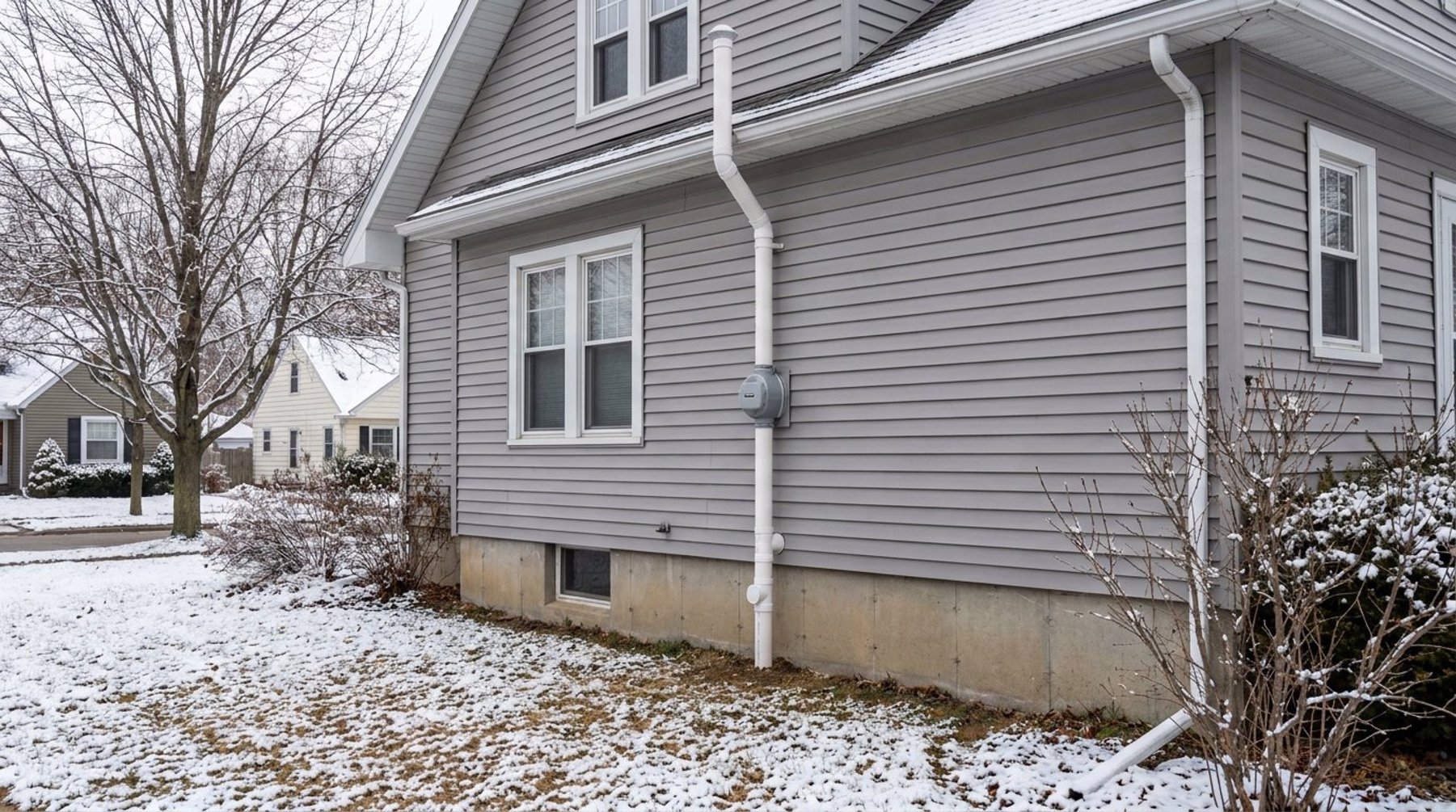
The most effective and widely used method is sub-slab depressurization. A contractor cores a hole through the basement floor slab, inserts a PVC vent pipe into the gravel or soil beneath it, and connects that pipe to a continuously running inline fan. The fan creates negative pressure under the slab, capturing radon before it can enter the living space and venting it safely above the roofline where it dissipates harmlessly.
A properly designed system includes a few key components:
- Suction point: One or more holes cored through the slab to draw gas from beneath the foundation.
- Vent pipe: Sealed PVC piping routed up through the home or along the exterior and terminated above the roof.
- Radon fan: A specialized, sealed fan rated to run 24/7, typically installed in an attic or outside.
- Manometer: A simple U-tube pressure gauge that lets you confirm at a glance that the system is working.
Sealing foundation cracks, covering the sump pit, and improving the seal around floor drains all support the system by closing off entry points. Because radon and groundwater both come up through the same below-grade openings, mitigation often pairs naturally with a sealed sump pump installation for a basement that stays both dry and safe.
Signs You Should Test and Mitigate
You should test for radon if you have never done so, if it has been more than two years since your last test, or if you are buying or selling a home in Michigan. There are no warning symptoms you can feel — radon causes no immediate odor, irritation, or illness — so testing is the only reliable trigger for mitigation.
Consider testing and, if needed, mitigation in these situations:
- Your home has a basement or slab-on-grade foundation that you spend time in.
- A real estate transaction requires a radon test as part of the inspection.
- You finished a basement or made it into a bedroom, office, or playroom.
- Neighboring homes in your Warren or Clinton Township area have tested high.
- You completed foundation work or a major renovation that may have opened new soil-gas pathways.
A short-term test kit gives a quick snapshot, while a long-term test offers a more accurate yearly average. If results come back at or above 4.0 pCi/L, the EPA recommends installing a mitigation system. Even levels between 2.0 and 4.0 pCi/L are worth addressing when feasible.
What to Expect From a Radon Mitigation Service Call
A typical residential radon mitigation installation takes a single day, and most systems are up and running within a few hours of work. The contractor evaluates your foundation, identifies the best suction point, installs the piping and fan, seals entry points, and verifies airflow before leaving. A follow-up radon test about 24 hours to 30 days later confirms the new levels.
When you hire a qualified local plumber or radon contractor in Macomb County, the visit generally includes a diagnostic assessment of your foundation type, a clear explanation of where the vent pipe will run, and a post-installation test recommendation. At H2O Plumbing, our team handles radon mitigation alongside the foundation, drain, and sump work that often goes hand in hand with it, so the whole below-grade system is addressed together rather than piecemeal. A well-installed system runs quietly in the background for 10 years or more, with the fan being the only part that may eventually need replacement.
Frequently Asked Questions
What is radon and why does it need mitigation?
Radon is a naturally occurring radioactive gas that seeps from soil into homes through foundation cracks and openings. It is the second leading cause of lung cancer in the U.S. Because it is invisible and odorless, mitigation — venting the gas safely outdoors — is the only way to reduce dangerous indoor levels once testing confirms them.
How much does radon mitigation cost in Michigan?
Most residential radon mitigation systems in Michigan cost between $800 and $1,500, depending on your foundation type, the number of suction points needed, and how the vent pipe must be routed. Homes with multiple foundation areas or finished basements may cost more. A professional assessment gives you an accurate quote for your specific home.
What radon level is considered dangerous?
The EPA recommends taking action at 4.0 picocuries per liter (pCi/L) or higher. Levels between 2.0 and 4.0 pCi/L still carry some risk and are worth reducing when practical. There is no completely safe level of radon, so lower is always better for long-term health.
How long does a radon mitigation system last?
The piping and sealed entry points last the life of the home, while the radon fan typically runs reliably for 10 years or more before needing replacement. Checking the system's manometer gauge periodically confirms it is still pulling soil gas effectively.
Protect Your Home in Southeast Michigan
Radon is a serious but solvable problem, and a properly designed mitigation system protects your family for years with almost no maintenance. If you have tested high — or have never tested at all — the team at H2O Plumbing serves Warren, Sterling Heights, Troy, and the greater Macomb County area with professional radon mitigation and the foundation work that supports it. Call (586) 746-8741 or contact us to schedule an assessment and breathe easier in your own home.